Bottom-up processing is a process of processing information that begins with the smallest detail and gradually progresses to more complicated concepts. This differs from top-down processing where we form an overall impression of the scene , and then try to find evidence that supports this idea. For example, a person who is visual processing the city’s streets may initially make an impression of the street is crowded noisy, chaotic, and loud. They may be looking for signs to support this hypothesis like people rushing across the street or hearing traffic sounds emanating from nearby vehicles.
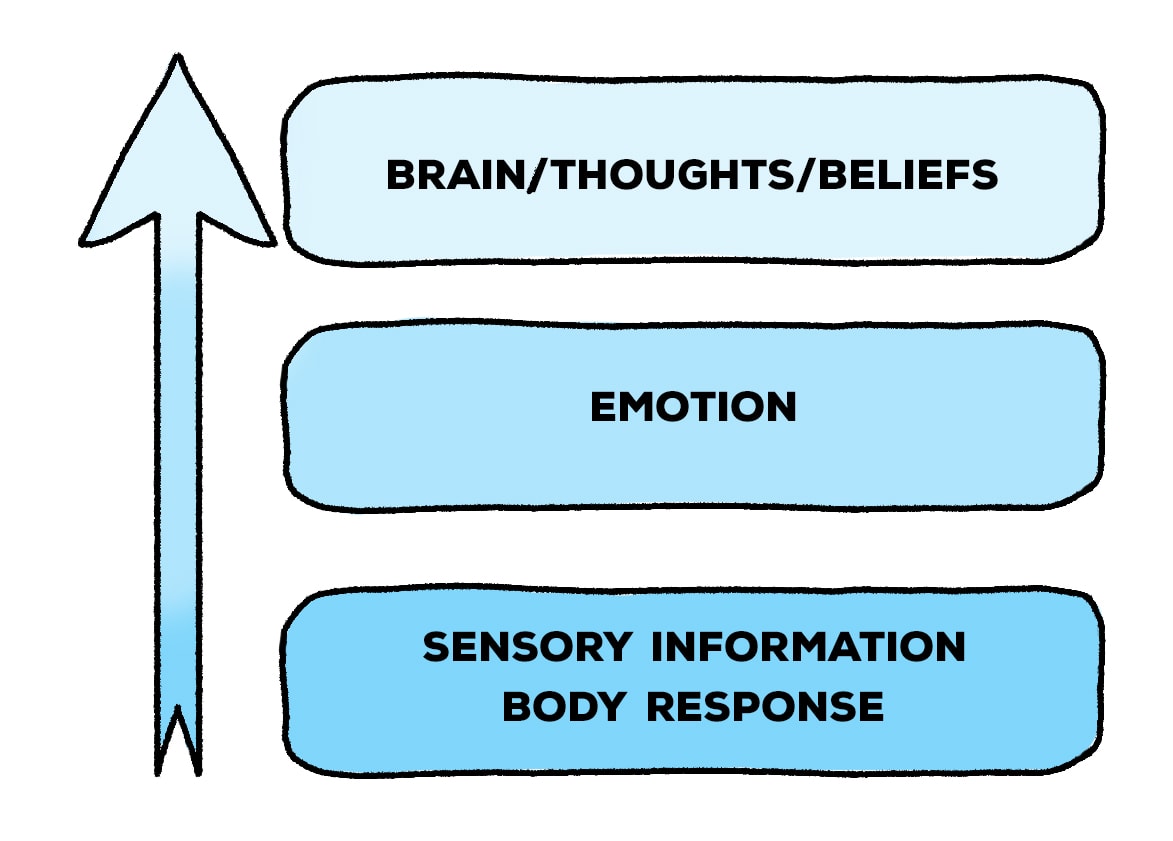
Since bottom-up processing tends be more analytical and driven by data, it has been widely examined in relation to specific cognitive taskslike memory and perception. Additionally, it can be utilized in many other areas of our lives, such as creative endeavors and decisions, like design and art. If used in a strategic and appropriate manner it can result in better decision-making and better insights into complex situations. Bottom-up processing despite having a negative reputation in academic circles, can be extremely useful to understand the world that surrounds us and the inner workings of our bodies.
The brain’s intricate structure is at the center of our thoughts of actions, choices and even decisions. This intricate organ plays an essential role in our brain’s intelligence, memory mood, and behavior. The brain’s function is affected by the bottom-up process. This is an especially important mechanism. Bottom-up processing refers specifically to the way information is processed beginning at the nerve cell as well as moving through interconnected neural pathways. It eventually affects higher cognitive processes, such as attention and perception. The process has been proven to significantly impact memory and learning. However, it could also be helpful in the treatment of illnesses like schizophrenia and Alzheimer’s. Understanding the mechanisms behind the top-down processing of brain function could allow us to unravel many of the mysteries that underlie the brain’s functioning. This could allow for innovative new techniques in neuroscience health, as well as other areas.
Bottom-up processing describes how information is processed by our brains. This is in contrast to top-down, which is more focused on integrating expectations and prior knowledge into the learning process. Bottom-up processing relies only on new and raw data. Bottom-up processing can be highly beneficial to any learner. It is focused on the specific aspects of learning, from the basic language and sounds up to more sophisticated concepts and concepts.
Bottom-up processing offers a major benefit: it allows us to take a step back and concentrate on each detail of information that we come across. This can help us stay interested in the information we’re learning as well as re-igniting our desire to acquire new knowledge, refine existing ones, and even spot mistakes or areas to improve. Also, by highlighting how various components of information are connected through logical chains , networks or chains It helps us to see how the various pieces can be connected to help our understanding at higher levels. Engaging in a bottom-up approach can ultimately help us to become more effective learners and more effective communicaters.
For more information, click Bottom up processing